
Properly organized fox storage
Please refill left fox at earliest convenience.
Properly organized fox storage
Please refill left fox at earliest convenience.


went to the flower shop today and impulsively bought an azalea and a violet
*sees female character who could kick my ass* that’s my girlfriend
it’s no wonder people don’t understand bisexuality and pansexuality when they don’t even understand liking both star wars and star trek
anakin, a 9 year old, somehow successfully navigates a fighter plane into space and achieves a military victory and rey is the mary sue
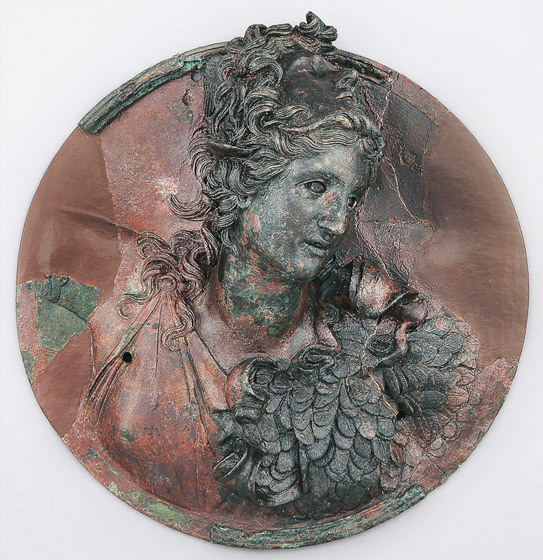
Medallion with Athena and Medusa, 200 – 150 BC; bronze and glass. Lent by the Hellenic Ministry of Culture, Education, and Religious Affairs, The Archaeological Museum of Thessaloniki.
With holes for attachment, this bronze disk probably adorned an elaborate chariot. The goddess Athena raises her right arm to throw a spear, the sense of her movement conveyed by feathers that seem to ruffle in the breeze and curling locks whipped by wind. Her helmet is composed of the head of the Gorgon Medusa, whose glance turned one to stone. The monsters placid face, with eyes closed in death, contrasts with the alert expression of the goddess. The medallion was found in 1990 among the ruins of an ancient building in Thessalonik, perhaps a Macedonian royal palace.
This commentary and in fact this whole spam of bronze is from the exhibition
Power and Pathos: Bronze Sculpture of the Hellenistic World at the National Gallery in Washington, DC
Every intellectual has a very special responsibility. He has the privilege and the opportunity of studying. In return, he owes it to his fellow men (or ‘to society’) to represent the results of his study as simply, clearly and modestly as he can. The worst thing that intellectuals can do – the cardinal sin – is to try to set themselves up as great prophets vis-à-vis their fellow men and to impress them with puzzling philosophies. Anyone who cannot speak simply and clearly should say nothing and continue to work until he can do so.
I get excited about my cat the same way those lads get excited about their friend doing something completely mundane. She’s laying down next to the toilet, the absolute mad man.



 EY FATTY BOOM BOOM