When I was a kid, the most thrilling thing that could happen to me was getting permission to have a friend stay the night. These sleepovers were so much fun that I was sure when I grew up I would live in a giant house with all of my friends forever. (I never wondered who would do the dishes.)
Nearly everyone I know had similar daydreams, but this is something we are supposed to grow out of, and replace with daydreams about living with a romantic partner.
This isn’t entirely going as planned for our society. It seems like every few weeks an article is circulated that inspires a giant online hand-wringing about millennials resisting committed romantic relationships, or Gen Xers continuing to have roommates. (“The millennial generation lacks the ability to love!” “Meet the people flatsharing in their 40s!”)
We’ve collectively decided that people who live with their friends have failed terribly, people who live with a partner have achieved incredible domestic success, and people who live alone or don’t centre their lives around romance are possibly just broken.
We are all encouraged to work hard to have stable lives. But at the same time, we’re encouraged to anchor our lives around the relationship that is the least stable.
It is uncomfortable to think of romantic love in those terms, but it’s not inaccurate.
hmmmm more examples of how the REAL LEORIO is fucking HOT and STRONG as opposed to his WEAK PASTY and FALSE 2011 characterization.
look at those BULGING MUSCLES, that TONED BODY. my dad walked by while i was reading this he is a STRAIGHT MAN and you know what HE said he said YOWWW THAT MAN IS FUCKING SEXY!!!
alright if this is NEW TO YOU because your sorry ass has only watched the 2011 ANIME because you have NETFLIX and it was CONVENIENT then let me CATCH YOU UP you have been fed a FALSE, extremely PASTY (though possibly SUN BLEACHED like that episode of SPONGEBOB where spongebob becomes SUN BLEACHED because he lies in the TANNING BED for TOO LONG) LEORIO. leorio is STRONG TAN and HOT AS HELL. a reminder the pictures above are AUTHENTIC from the ORIGINAL MANGA.
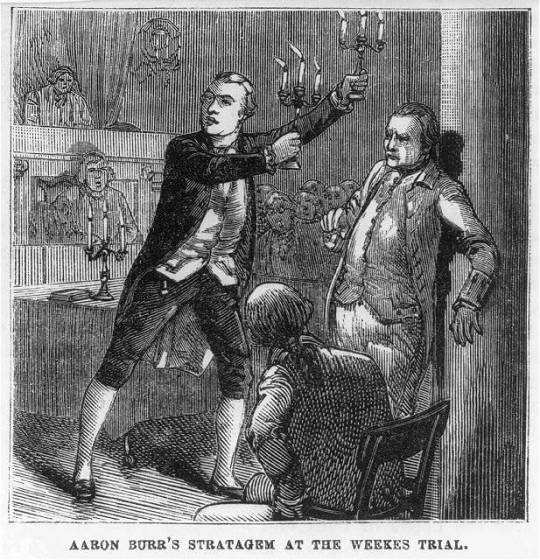
what i learned today: in 1800 alexander hamilton and aaron burr were both defense lawyers for a guy who was accused of murder. they tried to cast suspicion on another guy who was near the scene of the crime, richard croucher. the details of what happened next are contentious, because the court transcript is vague and it honestly sounds like something either of these two fuckos would have done, so here’s a brief run-down of the two equally beautiful stories that have evolved regarding richard croucher’s day in court, paraphrased from ron chernow who was kind enough to ensure history didn’t forget this anecdote
the legend is, while croucher was testifying, hamilton held two candles under the dude’s face, giving him a “sinister glow”. he told the jury, “i conjure you to look through that man’s countenance to his conscience.” apparently spooked by a-ham’s theatrics, croucher confessed on the spot.
however! aaron burr later insisted HE was the one who put on this circus show. his version of the story is, he grabbed two candelabras and thrust them at croucher, exclaiming “BEHOLD THE MURDERER, GENTLEMEN!” croucher then ran out of the courtroom in terror
Okay so like, seeing the way that reylo is shipped made me realize something.
A vast, vast majority of the reylo blogs I see are 15/16/17 year old girls, and I can’t actually say I’ve seen any that aren’t that specific demographic. What that says to me is that the issue with Reylo isn’t teenage girls romanticising abuse, it’s with the way that romance is sold to young girls.
I consumed a lot of “girl” media when I was younger, I read so many YA romance novels. And I know that a lot of people are aware of this because of all the jokes about “brooding YA love interests” but it’s really obvious the way it bleeds over in the fact that young girls, when presented with this angry, abusive character, automatically interpret him as a love interest. They hear the “I can take whatever I want line” and there are so many similar lines that have been painted to them as swoon-worthy. Young girls are taught to see the anger and aggressiveness characters like Kylo display as attractive qualities- especially when combined with his conflicted nature, which shows them he’s in some way “redeemable.” The “save the angry misunderstood loner from himself” narrative is sold to teenage girls so frequently that it’s almost impossible not to look at the way Kylo talks to Rey and see dozens of books I read when I was a kid.
Everyone remembers Twilight, how young girls were crazy over it and thought Edward was the boy of their dreams despite him stalking and manipulating and abusing Bella, because he was painted as such a romantic, misunderstood character. It was obvious with Twilight, because it became so endemic and everyone read it, but how many adults can say they’ve read a romance novel targeted at teenage girls in the past five, ten years? Because, let me tell you, Twilight is not alone in painting abuse as love, it’s just a very famous (and, admittedly, somewhat extreme) example.
Even ignoring the whole possibly-incest part of reylo, which is an equally nasty aspect in and of itself but not something I feel I can or should talk about, the biggest problem I see with Reylo is that the writers wrote him in a way that was most likely meant to be scary and abusive and threatening, and young girls are interpreting that as romantic, and the issue I see with that isn’t the shippers themselves, for the most part, but the kinds of things that society paints as romantic to young girls. So, yes, absolutely call out reylo for its myriad problems, but remember also that a lot of shippers are going to excuse those problems cause they’re young and this kind of cruelty is what’s been sold to them as romance for a long time.
So, story time: in my tweens and teens, I
was really into an Australian fantasy author called Sara Douglass. I
read her first two massive trilogies upwards of eight times each in the space
of eight years, plus everything else of hers I could lay hands on, because I
loved her work to bits. Along with Anne McCaffrey, she was pretty much the
first SFF writer whose books I collected religiously – my very first foray into
adult fantasy novels, before I’d even heard of writers like Kate Elliott and
Robin Hobb.
I haven’t read Douglass’s work in years.
But I can tell you now, without doubt or hesitation, that pretty much every single relationship depicted in
those books is abusive and rapey as fuck, with every negative aspect pretty
much continuously excused in the narrative Because He Loves her. Like, these
books are MESSED UP, and adult!me is horrified by it.
But I didn’t know that when I was twelve.
I didn’t know that when I was nineteen, even. But I know it now, and it
retrospect, it chills me to recall that, when I first read Kate Elliott’s King’s Dragon aged fourteen or so –
which is to say, at a point where Douglass’s works were my internal template
for fantasy everything – I struggled to understand how a character that Elliott
had purposefully and clearly written as abusive was, in fact, a villain. Hugh
is an abuser, a rapist, and deeply manipulative, but he’s also described as
beautiful, and he wants the heroine, Liath. He’s portrayed as tormented by how
much he wants her at times, and in other contexts, we see him do good deeds,
which… is basically the template for every.
single. one. of Douglass’s romantic heroes. And as such, I remember reading
Elliott’s books and feeling deeply conflicted, because even though I was
intimately in Liath’s perspective – she hated Hugh! feared him! loathed him! –
a part of me kept wondering at what point the narrative was going to redeem him
or push them together, because that’s what I was used to.
Anne McCaffrey’s books were another early
source of the same problem. I mean, there’s a lot to love about the
Dragonriders of Pern, but it entirely escaped my teenage notice (for instance)
that F’lar literally uses the word ‘rape’ to describe his sexual relationship
with Lessa in the first book, which the story treats as totally fine, or that Kylara being a victim of domestic violence
was maybe not okay, instead of a
thing she somehow deserves for being mean to Brekke. So that when I finally did
start reading authors who portrayed abusers as complex characters who were
nonetheless unquestionably abusive, I had no narrative frame of reference with
which to interpret that information. At times, I’d even feel frustrated that a
particular story wasn’t doing what I’d anticipated – why wasn’t the heroine
together with that guy? Why had the narrative set them up romantically, then
dropped him off the board?
Answer: because the story hadn’t been setting them up
romantically. The story had, in fact, been at pains to establish the dude’s
abusiveness; I just didn’t know to call it that until I started reading authors
who clearly, loudly debunked the tropes – authors like Robin Hobb and Kate
Elliott, whose books I still read today; who I’m lucky enough to have met, even
– that sustained my misapprehension.
So, yeah. While there’s a lot of YA and
SFF around right now that’s perpetuating the same problems, and especially in
media directed at teenage girls, it’s not a new problem. Which is why we still
need to discuss it.
Loudly.
meu nome não está na lista de aprovados da UFPR e estou levemente chateada porém levando numa boa
Each year in November, The Zushi event marks the end of the
Yabusame (horse back archery) season. Kanagawa, Japan. November 2015. Photography and text by Bernard Languillier on Flickr









 EY FATTY BOOM BOOM