HIstorian’s generally mark January 16th, 27 BC as the fall of the Roman Republic and rise of the Roman Empire, for on that day Octavian accepted the title “Augustus” and became the first Roman Emperor. However for the common Roman at the time, it seemed as though little had changed and the Roman Republic was alive and well. After all there was still a Senate, which created and passed laws, and there were still elections. To most Romans, the traditions and ideals of the republic still remained in place. This attitude continued for decades and generations, perhaps even centuries. Little did the Romans know that they were living in a shadow republic where a shadow emperor pulled the strings behind closed doors.
When Augustus came to power in 27 BC, he did not outwardly take the powers and identity of an emperor, in fact he rarely used the title “Imperator”, instead preferring the title “Princeps” (first citizen). He lived in a simple house, wore simple clothing, and disdained wealth at every turn. Rather than being a divine ruler, he propagated the illusion that he was “first among equals” or that he was “more equal than everyone else”. He allowed the Senate to continued their legislative work and appeared to be as humble and non-assuming as possible. Of course, this was all a show to convince the Roman public that the republic had not fallen and that he was not an emperor, but in reality Augustus pulled all the strings and personally worked all the cogs of government. He was a dictator, and the vast majority of the powers held by the Roman state were controlled by him. Hence Augustus’ republic was not a republic at all, it was an empire camouflaged in republicanism.
This era of Rome’s shadow republic would become known as the “Principate”. While the Emperor controlled most of the Roman government, the government continued to operate as usual to give the outward appearance of a functioning republican government. Elections were still regularly held in which citizens could vote for their senators and tribunes. However the Emperor had to approve of all candidates. The Senate still debated and passed laws, however all laws passed by the Senate had to be approved by the Emperor. The Senate controlled judicial matters, but only at the behest of the Emperor. It was often shadowy business to maintain the illusion that the Senate was in control. Often, when an Emperor disapproved of a certain law or policy, he would attend the senate debate or vote on the law. His mere presence was a signal to the Senate of his disapproval, and the Senate would act accordingly. Crossing or disobeying the Emperor had dire consequences, thus for the most part the Emperor usually got what he wanted. It’s is important to note however, that the Emperor, while powerful, was not all powerful. If the Emperor was a particularly lousy ruler, such as Caligula or Nero, the Senate could chose defy the Emperor’s decrees. For example, Caligula’s reign was fraught with instances were he and the Senate clashed over government matters. The Senate had the power to approve or disapprove of Emperors, and in the case of Nero stripped him of his titles and declared him an enemy of the state. However, such actions were rare throughout the history of the Principate.
As Emperors came and went, more and more they assumed more powers and more authority, especially after civil wars and national emergencies. By the third century AD, the pretense of Rome being a republic was wearing very thin. Finally in 284, Diocletian became Emperor and assumed absolute power over Rome. The Senate was stripped of all legislative and judicial authority, and all pretenses of maintaining a republic were finally ended. In fact, the Emperor even became an almost god-like figure to the Roman people. This new era of absolute rule in the Roman Empire became known as the “Dominate”, and would characterize Roman politics until the eventual fall and collapse of the Western Roman Empire. The Dominate continued in the Eastern Roman Empire until the Byzantines adopted a semi-feudalistic system during the Middle Ages.
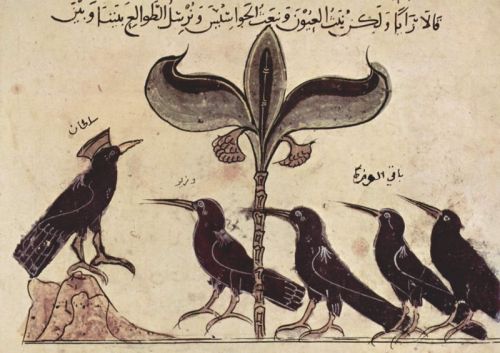
MONK #1: do birds have meetings MONK #2: absolutely they have a Meeting Hat and everything MONK #1: what do they have meetings about MONK #2: mostly who gets to wear the meeting hat
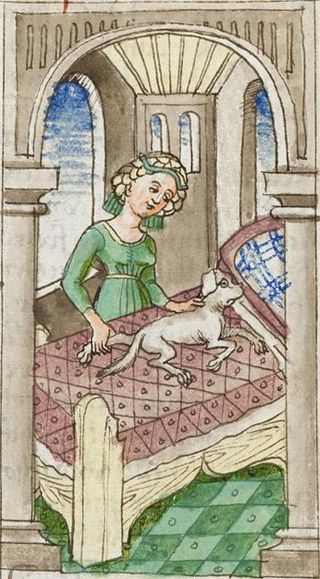
MONK #1: do human women sleep in beds or– MONK #2: no that’s dogs you’re thinking of MONK #1: right right
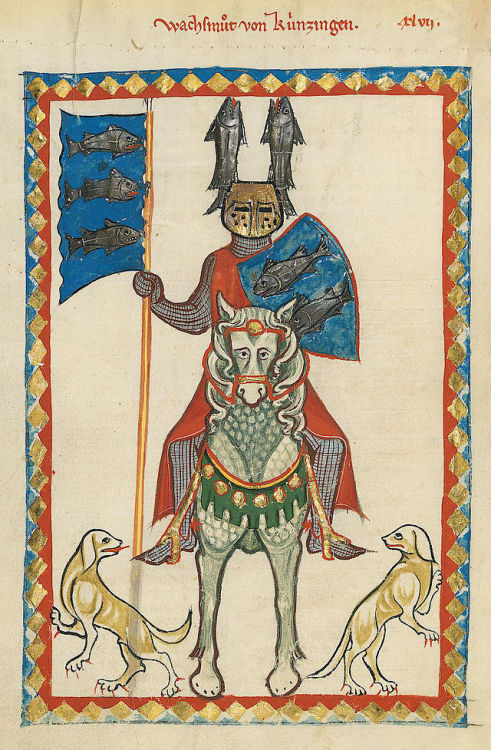
MONK #1: what part of the knight do fish go on MONK #2: the head MONK #1: thanks MONK #2: oh absolutely no problem at all MONK #1: both lying flatwise across the head, or…? MONK #2: no one on each side like ears MONK #1: ok great
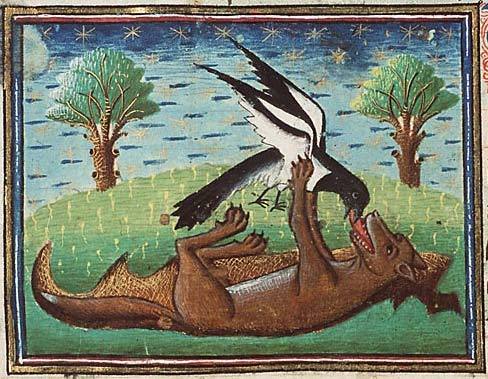
MONK #1: so when a dog and a bird make out MONK #2: right MONK #1: it’s usually the bird that’s on top right? MONK #2: yeah usually MONK #1: great
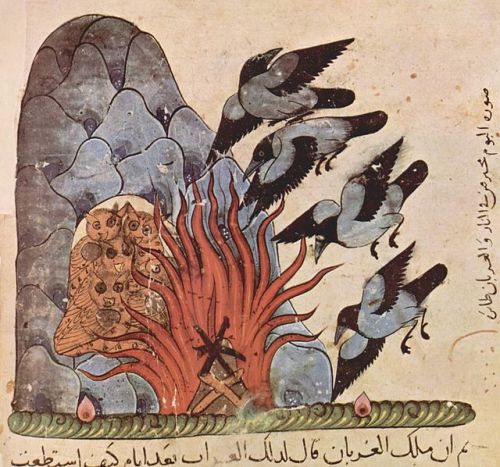
MONK #1: hey is it owls or people that live in caves and build fires? MONK #2: owls
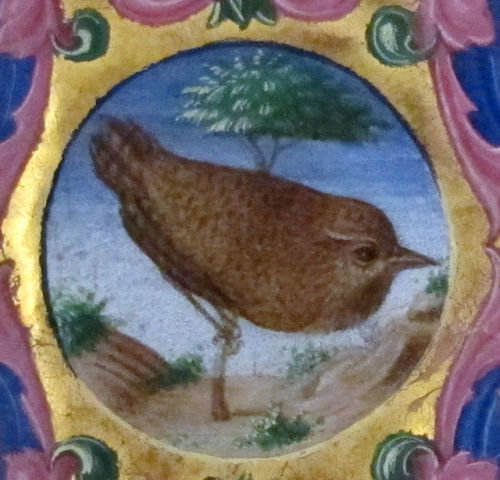
MONK #1: hey roughly what size are sparrows MONK #2: mm it kind of depends MONK #1: like AS big as a tree or not quite as big as a tree? MONK #2: oh pretty much the same size as a tree
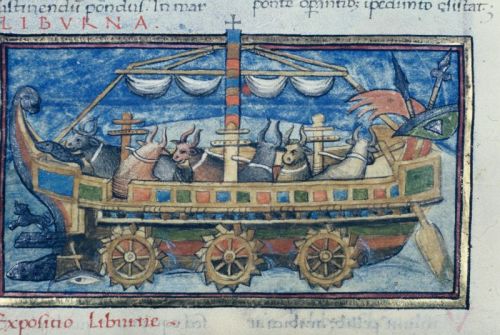
MONK #1: can cows sail boats? MONK #2: hahaha no common misconception they have to put wheels on the boat and roll it over land
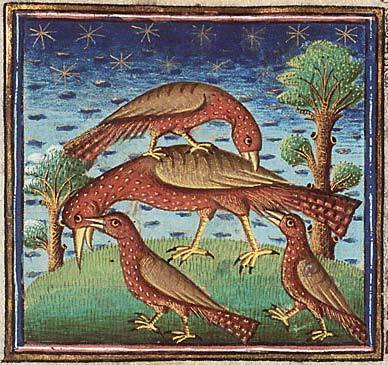
MONK #1: what do birds eat MONK #2: other birds mostly MONK #1: like different kinds of birds, or something else MONK #2: no birds only eat exactly the same kind of birds that they are
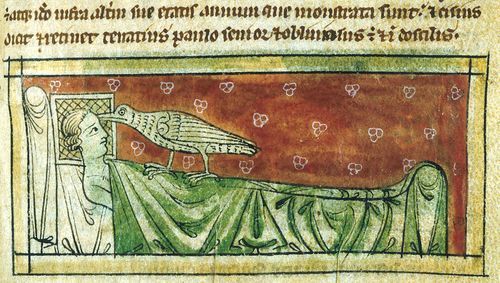
MONK #1: what kind of bird tucks people into bed at night usually I mean MONK #2: any bird any kind of walking bird MONK #1: and when it tucks you in, people usually look… MONK #2: incredibly worried it’s incredibly worrying when the bedbird tucks you in
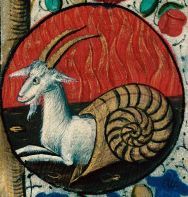
MONK #1: ugh sorry to bother you again MONK #2: no no its fine this is what i’m here for what is it MONK #1: what part of a goat is a snail again like the front end or the back end MONK #2: what part do you feel like should be the snail part MONK #1: the back part? MONK #2: you shouldnt doubt yourself you know more about goats than you give yourself credit for
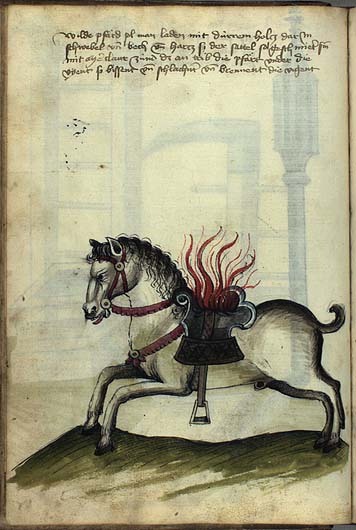
MONK #1: what usually rides horses like people or– MONK #2: fire
Tbh this is the funniest post on this dumb website
You know what? Okay. You ask a question, you’re going to damn well get a serious answer. You want to learn about spider farts, punk? You’re going to learn. You’re going to learn a lot more than you bargained for.
Arthropods obviously have very different digestive systems than vertebrates do, and spider digestive systems are unique even for arthropods. All but one species of spider are strictly predatory, and they take advantage of this diet by actually performing most of their digestion outside the body. Their formidable-looking fangs act like hypodermic needles to inject venom that immobilizes their prey. They then spit a cocktail of enzymes into the holes their fangs have created with their mouths (the venom and digestive enzymes are produced in different parts of the spider’s body!). These enzymes act like the ones in our saliva and stomach: they begin to break down the meat. It just happens to still be on the inside of the prey’s skin.
Some spider species, rather than keep everything neatly contained, just tear their prey apart and spit the enzymes onto the pieces. To each his own.
Once the prey’s insides have become a pre-digested slurry (and yeah, the prey is usually dead by this point), the spider slurps it up. This is actually a part of a larger process of spitting and slurping until everything is sufficiently broken down; hairs around the spider’s mouth block particles that are too large from being ingested. This is because the spider’s internal digestive system is shit and can’t handle anything but a liquid diet.
The spider’s stomach is actually a specialized sucking organ (called, appropriately, a ‘sucking stomach’) that flexes in order to facilitate all that slurping and spitting. It’s basically a muscular pump.
The spider digestive tract up to the sucking stomach is actually lined with cuticle- the analogue to our external skin. If having regular skin growing through your mouth and down to your stomach sounds odd, at least you don’t have to shed yours in one large piece. When spiders shed their exoskeletons, they actually have to shed the interior of their sucking stomach, too, and they pull this cuticle out through their brains. You cannot make this shit up.
While spiders don’t have much in the way of internal digestion hardware, they do have excellent storage units. These would be the caeca, located in the midgut past the sucking stomach. Since the spider doesn’t have space taken up by digestive organs, the caeca have a lot more room and even extend down some pairs of legs and even up towards the eyes in some species. Some species can even expand their caeca thanks to their soft abdominal cuticles- most arthropods have hardened exoskeletons and would explode if their organs expanded. So now you know why spider species are soft compared to other arthropods!
This storage capacity means that spiders can generally go a long time without eating, and when they do strike a big windfall, they can store much more than other arthropods could.
So now you know all about spider digestion- except for the end part. Even spiders have to poop. As you can see on the above diagram, they have an anus. Once the spider has extracted all it can get from its prey, the remains move from the caeca to the stercoral sac, which does what our colon does: it compacts and dehydrates everything into poop. And then the spider poops.
Spider poop is actually rather similar to bird poop- it’s usually whitish and semiliquid. This is due to the fact that it is full of concentrated uric acid. (Those of you familiar with the study of poop in all its forms will infer from this that spiders do not, in fact, pee.)
Spider poop, ladies and gentlemen.
Back to the original question: do spiders fart? And how will all that information about the spider’s digestive system (while quite fascinating) help you understand it? The answers are maybe and it really won’t. We fart because the bacteria in our colons produce air during the fermentation of our food. The actual smell comes from volatile sulfur compounds, including hydrogen sulfide, which make up less than one percent of the released gas. So 99% of the gas released when you fart doesn’t smell.
Spiders, too, have bacteria involved in fermentation in their stercoral sac, though they are very different bacteria than ours. But theoretically, that means that gas is probably produced as a byproduct of that fermentation. Though I don’t know of any recordings of spider farts out there.
I hope that answers your goddamn question, spider fart anon.
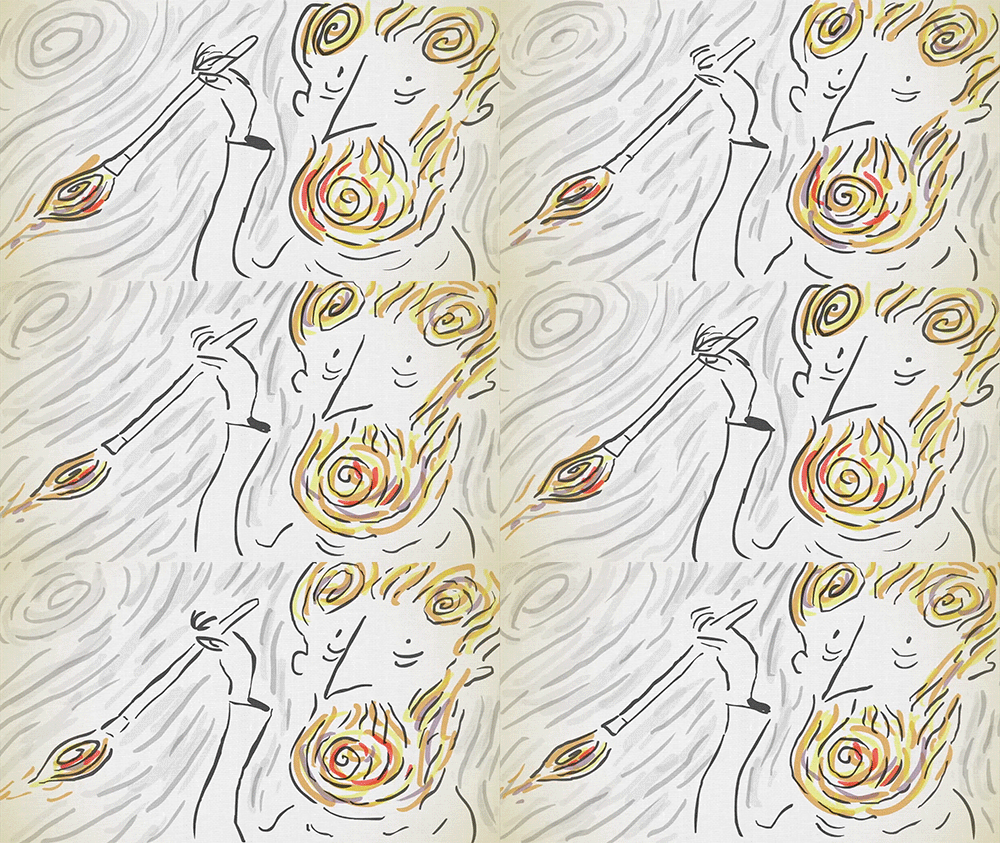
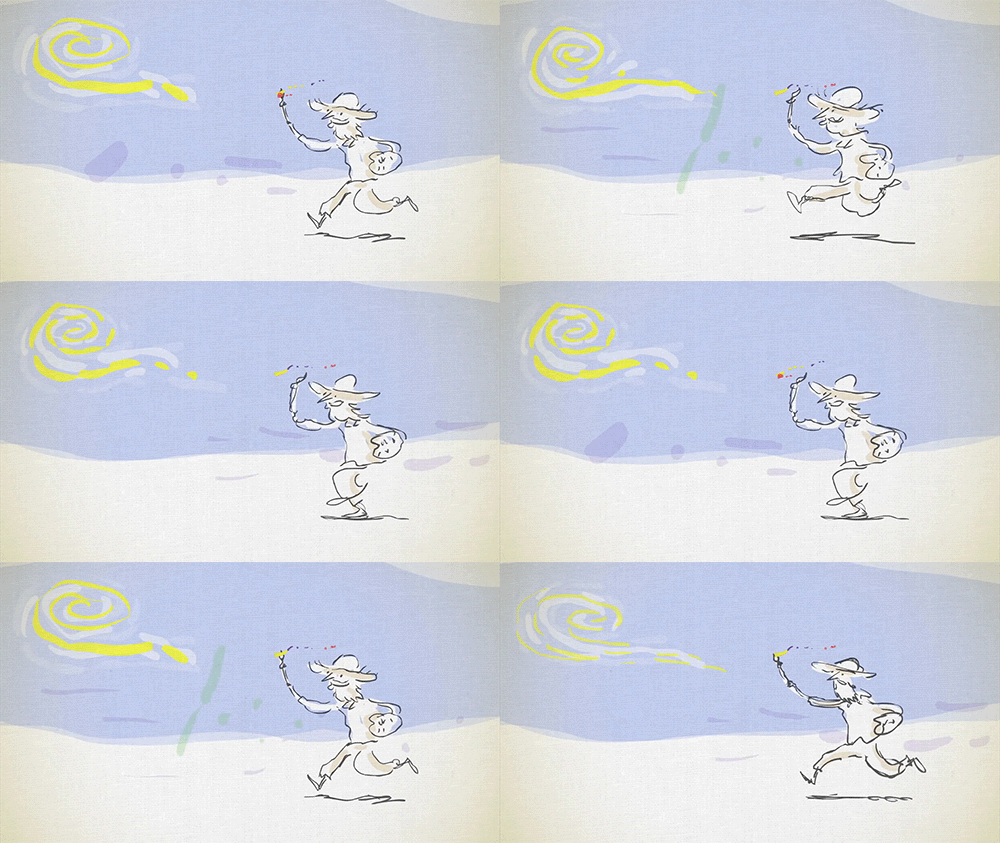
1. Vincent van Gogh was born on March 30, 1853, in Holland. He was named after his grandfather and his stillborn brother who died one year before Van Gogh was born.
2. Van Gogh was 27 years old when he painted his first piece.
3. When Van Gogh first began painting, he used peasants as models. He would later paint flowers, landscapes and himself, mostly because he was too poor to pay the models.
4. Van Gogh suffered from temporal lobe epilepsy, a chronic neurological condition characterized by recurrent, unprovoked seizures.
5. In a short period of ten years, Van Gogh made approximately 900 paintings.
6. During one of his seizures, Van Gogh attempted to attack his friend Paul Gauguin with an open razor. This ultimately resulted in the Vincent cutting off a piece of his own ear – but not the whole ear as is often rumored.
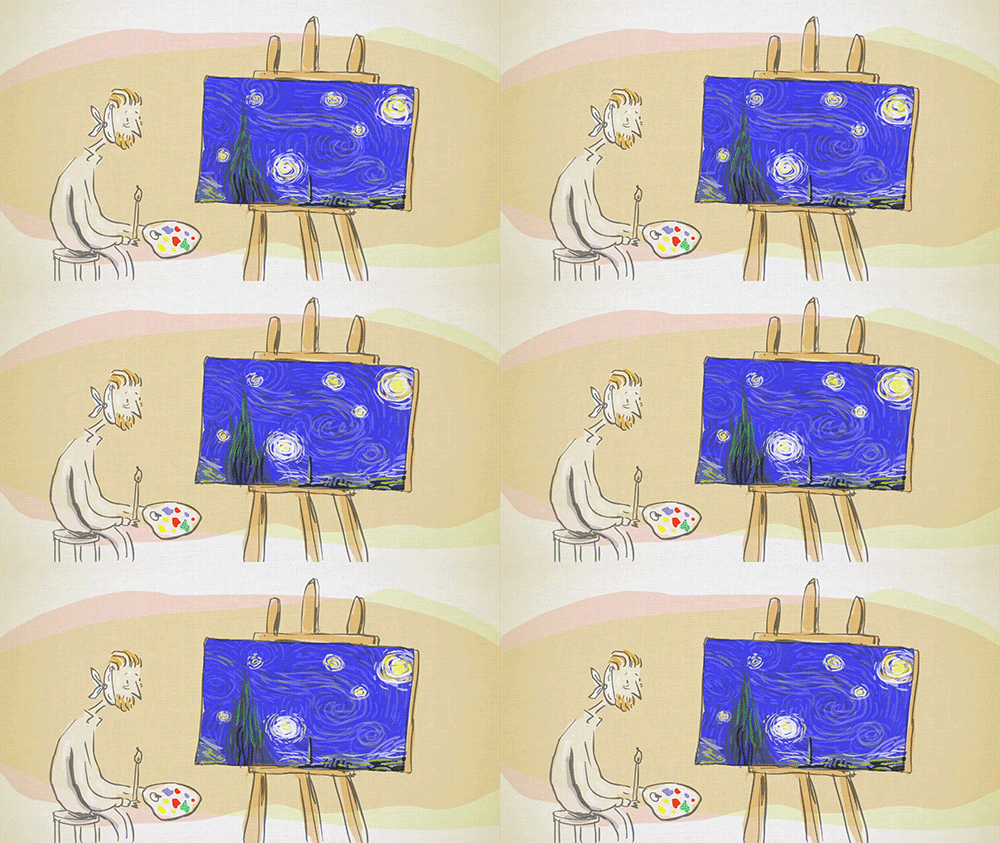
7. Van Gogh created his most famous work The Starry Night while staying in an asylum in Saint-Remy-de-Provence, France.
8. Vincent Van Gogh visually depicted turbulence, an incredibly complex (and still unsolved) mathematical principle in several paintings during a particularly chaotic time in his life.
9. Vincent shot himself in a wheatfield in Auvers, France, but did not die until 2 days later at the age of 37. His brother Theo, at his side when he died, said that Vincent’s last words were “La tristesse durera toujours” which means “the sadness will last forever.”
10. Vincent only sold one painting during his lifetime and only became famous after his death.
Can we talk about Spy Kids 3 for a second because it’s just the MOST BAFFLING CINEMATIC EXPERIENCE EVER
First we open to LITTLE BABY SELENA GOMEZ
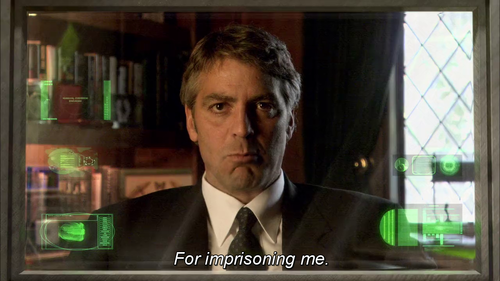
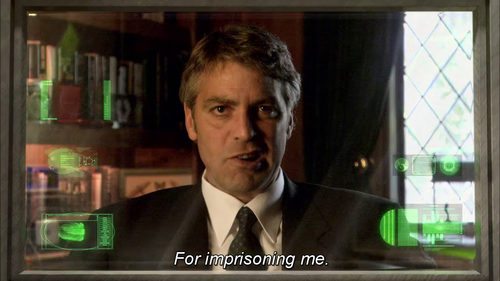
THE PRESIDENT IS GEORGE CLOONEY?
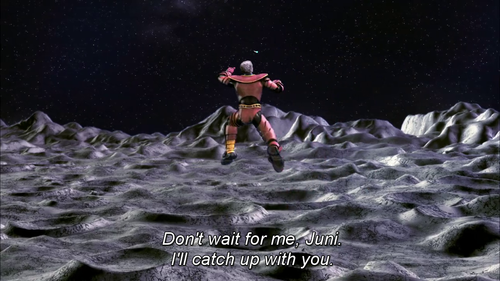
Later we see Juni’s grandpa who is KHAN??
who spends the whole movie chasing a butterfly
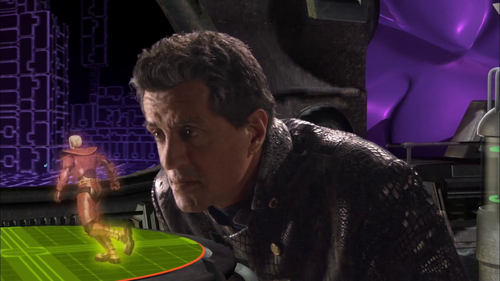
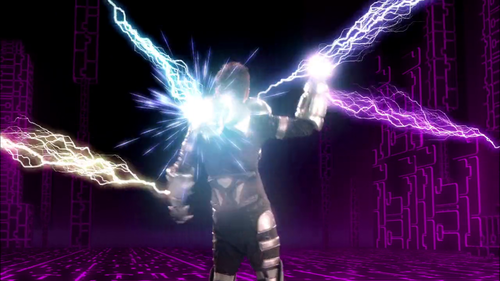
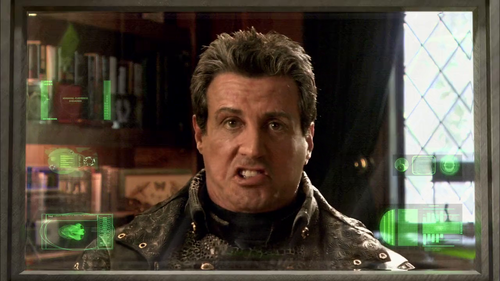
THE VILLAIN IS SYLVESTER STALLONE
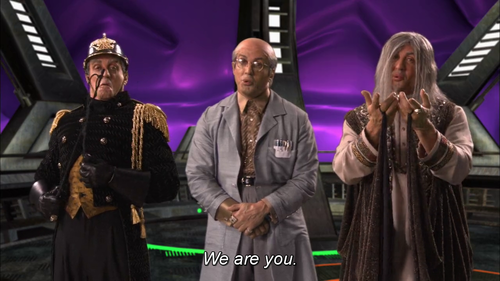
WHO GETS VILLAIN ADVICE FROM THREE OTHER SYLVESTER STALLONES
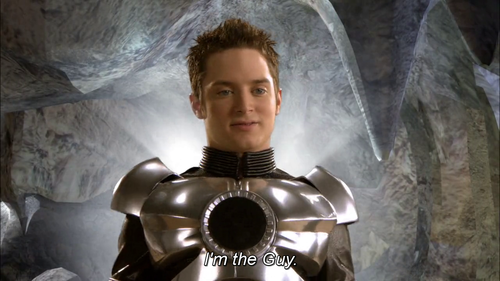
ELIJAH WOOD SHOWS UP
ONLY TO DIE IN THE NEXT SCENE
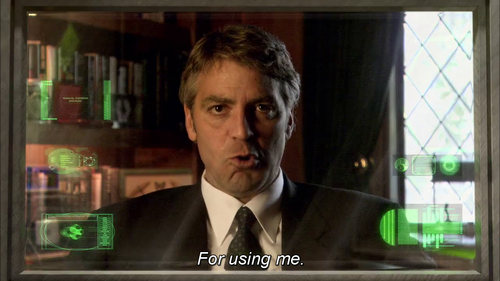
Then we find out that the president was actually the villain the whole time which makes ZERO SENSE but leads to this glorious George Clooney Sylvester Stallone impression
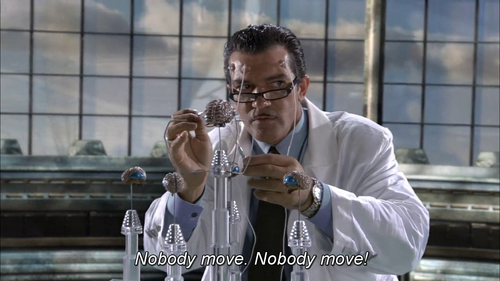
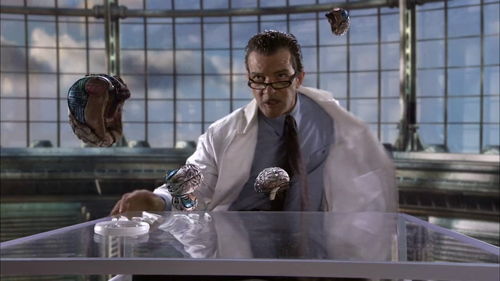
Then we get Antonio Benderez doing this?
AND THEIR UNCLE WHO IS STILL MACHETE
AND THEN STEVE BUSCEMI SHOWS UP ON A FLYING PIG FOR NO REASON
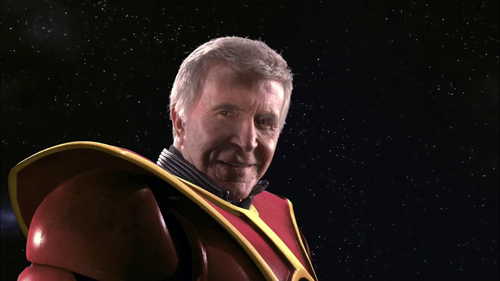
A few images that pay tribute to the iconic Leonard Nimoy. I talk at length about Nimoy and his legacy in the most recent episode of the Cinema Gorgeous Podcast. You can listen here.
here’s a question: if vladimir nabokov’s “lolita” is truly the psychological portrait of a messed up dude and not the girl — let alone a sexualized little girl, as all of the sexualization happens inside humbert humbert’s head — then why do all the covers focus on a girl, and usually a sexy aspect of a girl, usually quite young, and none of them feature a portrait of humbert humbert?
here are nabokov’s original instructions for the book cover:
I want pure colors, melting clouds, accurately drawn details, a sunburst above a receding road with the light reflected in furrows and ruts, after rain. And no girls. … Who would be capable of creating a romantic, delicately drawn, non-Freudian and non-juvenile, picture for LOLITA (a dissolving remoteness, a soft American landscape, a nostalgic highway—that sort of thing)? There is one subject which I am emphatically opposed to: any kind of representation of a little girl.
and yet, the representations of the sexy little girl abound.
i became driven by curiousity. why did this happen? why is this happening?
i am not alone — there’s a book about this, with several essays and artists’ conceptions about the politics and problems of representation surrounding the covers of “lolita.” this new yorker article gives a summary of the book and its ideas, and interviews one of the editors:
Many of the covers guilty of misrepresenting Lolita as a teen seductress feature images from Hollywood movie adaptations of the book— Kubrick’s 1962 version, starring Sue Lyon, and Adrian Lyne’s 1997 one. Are those films primarily to blame for the sexualization of Lolita?
As is argued in several of the book’s essays, the promotional image of Sue Lyon in the heart-shaped sunglasses, taken by photographer Bert Stern, is easily the most significant culprit in this regard, much more so than the Kubrick film itself (significantly, neither the sunglasses nor the lollipop ever appears in the film), or the later film by Adrian Lyne. Once this image became associated with “Lolita”—and it’s important to remember that, in the film, Lolita is sixteen years old, not twelve—it really didn’t matter that it was a terribly inaccurate portrait. It became the image of Lolita, and it was ubiquitous. There are other factors that have contributed to the incorrect reading, from the book’s initial publication in Olympia Press’s Traveller’s Series (essentially, a collection of dirty books), to Kubrick’s startlingly unfaithful adaptation. At the heart of all of this seems to be the desire to make the sexual aspect of the novel more palatable.
here’s a couple of kubrick inspired covers:
which very well could have, after tremendous sales, have influenced the following covers:
…straying so far from the intention of nabokov that the phenomenon begins to look more like the symptom of something larger, something sicker.
after a lot of researching covers, it was here, in this sampling of concept covers for the book about the lolita covers, that i found an image that best represents the story to me:
[art by linn olofsdotter — and again, this is not an official cover]
but why aren’t all the covers like that? even the ones published by “legitimate” publishing companies, with full academic credentials, with no intended connection to the film; surely they must have read nabokov’s instructions for the cover. and yet, look at the top row of lolita covers: all legitimate publishing companies, not prone to smut. and yet.
my conclusion is that the lolita complex existed before “lolita” (and of course it did) — a patriarchal society is essentially operating with the same delusions of humbert humbert. nabokov did not produce the sexy girl covers of lolita, and kubrick had only the smallest hand in it. it was what people desired, requested and bought. the image of the sexy girl sells; intrigues; gets the hands on the books.
as elizabeth janeway said in her review in the new york review of books: “Humbert is every man who is driven by desire, wanting his Lolita so badly that it never occurs to him to consider her as a human being, or as anything but a dream-figment made flesh.”
isn’t that our media as a whole? our culture as a whole?
the whole lot of them/us — seeing the world through humbert-tinted glasses, seeing all others as Other and Object, as solipsistic dream-reality. as i scroll through the “lolita” covers i wonder: where’s the humanity in our humanity?









 EY FATTY BOOM BOOM