The real tragedy about the barricade is that we don’t know how much is true. Victor Hugo was there at the June Rebellion, so what is fact and what is fiction? That question gives me chills because we’ll never know.
Charles Jeanne (who I think is probably actual real life Enjolras) wrote an in-detail account of the ACTUAL barricades in a letter to his sister after the fact
I’m so glad somebody asked this, because the answer is: when they finally ran out of ammunition, Charles Jeanne rounded up everyone who was still standing, went, “look, if we’re going to die, we might as well die fighting,” and led a suicidal ten-man charge against an entire flippin’ infantry column, armed with nothing but bayonets. The first few ranks of soldiers were so unprepared for such a spectacularly insane attack that they were too surprised to shoot. They crossed bayonets and tried to hold the insurgents off in hand-to-hand combat, but Jeanne’s swordsmanship was apparently aces, because he held off a bunch of them at once and covered his friends as they tried to breach the ranks. And once they were in, nobody could shoot them for fear of taking out their own guys.
So the last stand that the insurgents had intended as a noble suicide ended in them breaking through the ranks entirely and winding up in the next street over, outside the combat zone, going “well shit, what do we do now?” (I’m guessing the infantry column wasn’t very deep; central Paris at that point was a rabbit warren of narrow twisty streets, and assembling troops en masse for an organized attack was a logistical nightmare.) Unlike the National Guard, the army weren’t total chumps and got themselves turned around to give chase and start shooting once they weren’t at risk of friendly fire any longer… and that’s when all the civilians holed up in their houses went “no way, you’re not getting your hands on these crazy bastards” and started hurling furniture and crockery down on the soldiers’ heads. Jeanne was understandably distracted at the time, but afterwards somebody informed him that the barrage of unlikely projectiles included a piano. A piano. That is some straight-up Looney Tunes slapstick right there. No wonder Hugo went for the heroic death scene instead; if he’d stuck to real life, he probably would’ve gotten complaints that he’d wrecked his readers’ suspension of disbelief.
Anyway, someone opened an alley gate for them to shelter in and take stock of the casualties—most of them survived(!!!), but a few were pretty nastily wounded. Their host then had to lock Charles Jeanne in to keep him from charging right back out and taking on the whole goddamn army singlehanded. He probably would’ve broken down the door if the poor man hadn’t pointed out that going back out would give away his wounded comrades’ hiding place and the identities of the people sheltering them. They sat there listening to the gunfire gradually slow and go silent, and then in the middle of the night the ones who could still walk were allowed to slip away one by one at long intervals from each other. Charles Jeanne went straight home, slept like the dead for a few hours, was woken up at five in the morning with a warning that he’d been denounced and the building was surrounded, and then slipped out in disguise and managed to evade the police for four months before a former comrade ratted him out and he was arrested.
And this, ladies and gentlemen, is why Charles Jeanne’s letter is an absolute treasure that deserves to be available to anyone in Les Mis fandom who wants to read it. Incidentally, “how Actual Historical Enjolras survived the barricades by being too good at his suicide mission” is also one of the stories I tell when anyone asks me what the hell is so interesting about researching people nobody’s ever heard of from an obscure chapter of French history.
Every millennial who grew up watching “Spongebob Squarepants” has come to the same horrifying conclusion: you have turned into Squidward. No matter how buoyant, how cheerful, how optimistic you were as a child, there comes a point where you begin to identify with Squidward more than any other character in the show.
You could explain this phenomenon with the disillusionment and cynicism of growing up, or the burdens of being a teenager in a post-John Hughes society. There is, however, an even simpler answer. Spongebob is an allegory for Karl Marx’s The Communist Manifesto. The show revolves around Spongebob, the hardworking proletariat, accepting a low-level fry cook job and enduring Mr. Krabs’ exploitation with a grin on his face.
The face of compliance
It’s not hard to draw the parallels between Mr. Krabs and the bourgeoisie. He’s a cheapskate who underpays and overworks his employees for his own personal gain. Mr. Krabs famously ripped off his own arms (claws?) to retrieve a dime that fell down the drain. He took his workers on a boating trip to retrieve his millionth dollar from the jaws of a giant clam. He has zero regard for his employees’ safety and almost routinely puts them in danger for his own benefit. Mr. Krabs’ daughter, Pearl is an extension of the bourgeoisie archetype. She’s vain, self-centered, and largely unaware of others’ misfortune. She lives in a bubble, obsessed with clothes, makeup, and celebrities — because she has the leisure for such frivolities.
Remember when Pearl gentrified The Krusty Krab
Speaking of living in a bubble, Sandy is not exempt from analysis. Sandy is quite literally shielded away from the rest of the world. She represents the intellectual elite, using her privilege and higher education to jeopardize working class jobs and further the industrial revolution. Her endeavors into space mirror the Cold War-era “Space Race,” capitalism versus communism. Her voyage ends on the moon, just like the U.S.’s did. On top of her scientific record, Sandy is independent and self-sufficient, exemplifying capitalistic ideals of individualism.
If Sandy is the intellectual elite, then Patrick Star is just the opposite. Patrick represents the bourgeois caricature of the working class that capitalists want you to buy into. He is ignorant, undereducated, and lazy. He lives under a rock, likely because he can’t afford anything else — although he doesn’t seem to mind. Patrick appears to deserve his poverty because he does nothing but sleep, yet he also seems at peace with his lot. This idea of the happy, unproductive bum simultaneously vilifies and justifies the proletariat. “See, they’re poor because they just don’t work hard enough! In fact, they like being poor!” Patrick Star is arguably one of the most offensive cartoon depictions of this generation.
Blatant vilification of blue-collar workers
Spongebob, on the other hand, represents the ideal proletariat. Spongebob is hardworking, humble, and endlessly optimistic. He’s a lot like us before we realized the inherent evils of a capitalistic society. Day in and day out, Spongebob gleefully works a minimum-wage job flipping burgers with no hope of promotion. He’s a cog in Mr. Krabs’ greasy machine, but he doesn’t even realize it. He just continues to skip to work every day, chanting “I’m ready!”. Ready for what, Spongebob? Ready for the bourgeoisie Kool-aid he’s been absorbing through his poriferous sponge body.
Spongebob is the ideal worker, and as children, we aspired to be just like him. The very first episode of Spongebob showed him getting his first job as fry cook. According to the show, the very best achievement you could receive is being gainfully employed. Not only employed, but tirelessly productive and efficient to maximize your manager’s profits. Spongebob famously served busloads of anchovies at a never-before-seen pace. It wasn’t enough that Spongebob could perform his job well; he had to go above and beyond his duty in order to seem valuable. These are the principles we instilled in the youth of today. What went wrong?
Back, finally, to Squidward. Squidward isn’t like Spongebob or Patrick. He isn’t satisfied in his low-level employment. What Squidward seeks is artistic satisfaction and world renown. He covets the success of his employer without achieving the work ethic necessary for someone of his class to ascend. Squidward has realized that the cards have been stacked against him at every turn, and resigns himself bitterly to the clutches of capitalism. If Squidward were less jaded, he could be the catalyst to prompt full-scale class warfare, perhaps ending in a communist utopia. Unfortunately, Squidward’s defeatist personality and egoism prevents him from implementing social change.
Mfw I realized I will never dismantle oppressive power structures that infiltrate our economic landscape
That is why we are all Squidward. We’ve uncovered the limits of capitalism and realized that hard work may not always pay off. We’ve begun to notice the oppressive economic and social structure that infiltrates our everyday life. We yearn for something higher, but feel that change is out of our reach. We become bitter, combative, self-deprecative, and cynical. There’s a reason Squidward is the unhappiest character on “Spongebob.” Not only for faults of his own, but for his own rotten luck. The show subliminally punishes Squidward for his views, hoping to prod viewers back towards Spongebob’s blithe, unfounded optimism.
Their efforts were to no avail. Millions of millennials are finding themselves disillusioned, realizing all along that Squidward was the reasonable one. He had a right to protest Mr. Krabs’ vile working conditions, and his sarcasm was merely a coping mechanism for the injustices placed against him. Squidward is the dissatisfied proletariat, and we identify with him more than ever. The difference is, we have the energy and collective power to succeed where he could not. Together, we can rise up and defeat the bourgeoisie, establishing an egalitarian society that does not prey on the lower classes. In the words of Spongebob, “I’m ready.” Are you?
i’m going to scream who writes this out in essay format
Imagine being in a relationship in which you are treated like an equal, consciously and unconsciously, sexually, emotionally, socially, romantically, without being bound by gender expectations, without risk of pregnancy (or having your reproductive rights taken away from you), without feelings of inferiority, without being mistreated or neglected because men don’t understand your body and can’t be bothered to learn how to give you pleasure (or that you even deserve pleasure). Imagine having a reciprocating relationship with someone who knows how to touch you and how to talk to you, who will never abuse you or take away your consent. Imaging feeling powerful, safe, like the default rather than the specific or second-class. Imagine not requiring special handling by awkward, inconsiderate men who were never taught any better. Imagine being allowed to touch and enjoy and indulge without apprehension. Imagine being able to trust your partner. Imagine knowledge and understanding, someone who sees your depths and treats you the way you’d treat yourself if you hadn’t been told from birth that you weren’t worth it.
Girls aren’t “making them gay.”
Girls are fantasizing about being equal.
I have wondering about this in fandom for many years and reading this just made me tear up. I figured this was a big reason, but breaking it down to this extent made me so extremely sad. I realized a long time ago that even if I met the nicest guy in the world, I still have to battle all those things mentioned above. Just being friends is hard. I don’t have a happy history in this area like a lot of women and I have major trust issues with men and I wish somehow that wall could be broken down and we could all truly be seen as equal…as people with value. If you have all of the above with someone of the opposite sex then you are really lucky. See women are expected to give all those things listed above and settle for not getting them in return. I believe it’s a rare thing if you have it returned. Like I said, if I was with the nicest guy in the world I will always doubt myself, think he see’s me as different, talk to me different… Why? Because that’s our experience. This world raises us to believe we are worth absolutely nothing. The idea of being equal is one of our greatest fantasies.
It’s sad that it has to be a fantasy.
It’s totally sad.
But on the other hand, slash writers are some of the most empathetic people I know. And they’re great educators, too, probably in ways they might not expect. A good slash fanfiction writer can help women understand their desires and overcome some of those feelings of shame and worthlessness.
Think about how many girls have learned how to masturbate thanks to slash fanfiction.
Sometimes just knowing that we’re all reading and enjoying the stories is an immense comfort. People will tell you that slash is trash, that fangirls are desperate and pathetic, but ladies telling ladies that they’re allowed is a powerful thing.
Yeah, oh man. This is. Yeah, this is a lot. I especially feel the taboo surrounding female sexuality to the point that even though I’m Pretty Gay myself, I’m uncomfortable with my own sexuality (not as in orientation) and also dealing with the sexuality of other women. Like in some ways, I am always hesitant to appreciate sexiness in women because we are almost never shown female sexuality in a safe, respectful, and equal way and it still freaks me out.
I will never forget — and I wish so *badly* I still had a copy — the essay one of my exes wrote before she gafiated, in which she talked about how the act of writing slash and being part of the slash community in general had allowed her to “write herself back into her body”.
To, essentially, take off some of the blinders and filters western culture had put on her, all the things that had convinced her that, as an “overtall, fat, awkward, anxious, and altogether unattractive” person (she did have some anxiety issues, but none of the rest was true by any measure but all the lies we’ve ALL been told), she deserved neither happiness, nor romance, nor anything resembling sexual parity or satisfaction.
We met through fandom — she later told me she’d been quietly lurking on my mailing lists and around my websites for two years before she ever actually spoke to me — and we had four good years together before our relationship started to fall apart.
And, while not all of our happiness — together and separately — can be laid at the feet of the various slash goddesses, quite a lot of it can be.
Slash wrote *me* back into my body, too — several times, in several ways. Slash connected me to genders I never could’ve imagined, or could’ve imagined being *worth* connecting to in the days before I really understood the possibilities inherent to taking the media I had been given and *transforming* it.
We are *here*, and our pleasure is worth it — our pleasures, plural, are part and parcel of our identities.
And, you know, some of us, after we’ve been writing slash for a good, long while?
Find new ways to express those pleasures when women are there, new ways to understand those aspects of our sexualities — our *identities* — which include *hetero*sexuality.
It’s a journey. A process. A continuum. A spectrum. A *multiverse*.
no offense but this is literally the most neurotypical thing i have ever seen
Uhhhh… no.
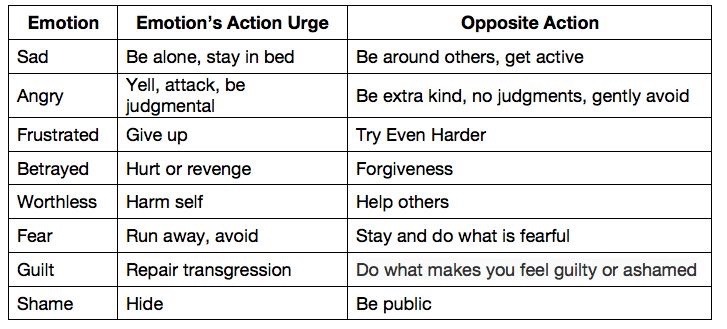
This is what they teach you in therapy to deal with BPD and general depression.
When I got out of the hospital after hurting myself a second time, I got put into intensive outpatient program for people being released from mental hospitals as a way to monitor and help transition them into getting them efficient long-term care.
This is something they stressed, especially for people with general depression. When you want to stay at home and hide in your bed, forcing yourself to do the opposite is what is helpful. For me, who struggles with self harm- “I want to really slice my arm up. The opposite would be to put lotion on my skin (or whatever would be better, like drawing on my skin) the opposite is the better decision.” It doesn’t always work because of course mental health isn’t that easy, but this is part of what’s called mindfulness (they say this all the time in therapy)
Being mindful of these is what puts you on the path to recovery. If you’re mindful, you are able to live in that moment and try your best to remember these better options.
I swear to god, I don’t get why some people on this website straight up reject good recovery help like this because either they a)have never been in therapy so don’t understand in context how to use these coping tactics. Or b)want to insist that all therapists and psych doctors are neurotypical and have zero idea what they are talking about. (Just so ya know, they teach this in DBT, the therapy used to help BPD. The psychologist who came up with DBT actually had BPD, so….a neurotypical women didn’t come up with this.)
I have clinical OCD and for me, exposure therapy–a version of “do the opposite”–has been fundamental. I’ve had huge improvement in the last year, but I’m 100% clear that if I hadn’t done my best to follow this protocol I’d be fucked. I have a lot of empathy for that moment when you’re just too tired to fight and you check the stove or you wash your hands or go back to the office at midnight to make sure the door is locked. But the kind of therapeutic approach outlined above has been crucial for me.
It’s hard to do. I’ve weathered panic attacks trying to follow this protocol. But I’ve gotten remarkable results. I was afraid to touch the surfaces in my house, okay? I was afraid to touch my own feet, afraid to touch my parrot–deliberately exposing myself to “contamination” has helped me heal. I can’t speak for people with other issues, but this has helped my anxiety and OCD.
I feel that tumblr, in an effort to be accepting of mental illness, has become anti-recovery. Having a mental illness does not make you a bad person. There is nothing morally wrong with having a mental illness anymore than more than there’s something morally wrong with having the flu. However, if you’re “ill” physically or mentally, something is wrong in the sense that you are unwell and to alleviate that you should try to get better. While there is not “cure” for mental illness, there are ways to get better.
There was a post on tumblr where someone with ADHD posted about how much you can get done when you focus and was attacked for posting about being “nuerotypical” – when she was posting about the relief she got from being on an medication to treat her illness.
I saw another post going around tumblr that said something along the line of “you control your thoughts, why not choose to have happy thoughts” which again was shot down as “nuerotypical” but while you don’t have control over what thoughts come into your mind, you absolutely can and should choose to have happy thoughts. In DBT we call this “positive self talk”.
I’m in DBT to help treat PTSD stemming from child abuse. The abuse and abandonment I experienced destroyed my self esteem and created a lot of anxiety over upsetting other people. DBT has taught me to recognize when my thoughts are distorting realty ‘no one likes you’ and answer back ‘plenty of people like you, you don’t need everyone to like you, especially if the relationship doesn’t make you happy’, to respond to the thought ‘I’m so worthless’ with ‘you’re really great and have accomplished something’
And it’s not easy to challenge your thoughts, it’s a skill that’s learned and it’s hard to force yourself to think something that doesn’t seem authentic or even seems wrong to think – it’s hard to be encouraging towards yourself when you hate yourself – but you force yourself to be aware of your thoughts and push back when you fall into unhealthy patterns
That isn’t “so neurotypical” that’s recovery.
Not shaming mental illness doesn’t mean shaming RECOVERY.
Pro-Recovery isn’t anti-disability.
Do not shame healthy behaviors as “neurotypical”.
Learning healthy behaviors and taking steps to treat mental illness and disorders including taking medication if that’s what works for you is important. You shouldn’t be ashamed if you have mental illness, but you shouldn’t say ‘well I’m not neurotypical therefor I can’t do anything to get better’ – while there is no cure for mental illness, there is a lot you can do to get better, to function better, to manage your mental illness and be safer, happier, and healthier for it.
u know i’ve expressed my love for fake married/fake dating many, many times but like. is anything better. is anything better on this earth. does any trope or genre truly care for us quite like this one. let us reflect on a few of the gifts that fake married/dating consistently gives us:
character a asks “hey, will you pretend to be my date for a week for [convoluted excuse that could easily be solved without a fake relationship]?” character b, fully convinced of the futility of their DEEP AND UNREQUITED LOVE, figures this’ll be a chance to spend time with them and possibly put their feelings to rest. character b is always wrong & it is always amazing.
having to SHARE A LIVING SPACE FOR ARBITRARY FIC REASONS. having to see eachother in their pajamas first thing in the morning, messy haired, drowsy eyed and soft faced. going from “you can have the bathroom first” to brushing their teeth beside eachother and feeling like this closeness has always existed (at the same time, painfully aware that it won’t always).
related to the last one — “”practicing”” their casual touching so that it’s easier when they’re in public. feeling SWOOPS OF ARDOR AND AGONY when they feel the brush of a hand on their neck, or an arm loop around their waist. don’t you love how fake marrieds/dates are always method actors who must FULLY INHABIT their roles. i love it. i live for it.
bed sharing. :^) we all pretend we’re bigger than this but we are not.
“kiss me while everyone’s looking.”
the character who wasn’t aware they were in love (maybe always had been) until the fake relationship is in full swing, realizing they have to sort their feelings out before their time together is up. sometimes they succeed and angst is minimal. most of the time they don’t, really.
telling eachother “i love you” in public and meaning it, heart aching over it, but bELIEVING THE OTHER 2 BE ACTING. my soul is still 15, this garbage still gets me. u don’t get pining better than this.
the days leading up to the end of the arrangement where one of them, still confused and muddy about their Feelings and unsure how to break things off, stiffens to the casual, reflexive touching and puts their walls back up. the other one accepts and respects this as the end of their agreement and squashes back down all the hope they ever had, stuffs it next to the heartbreak they’re ignoring deep in their chest.
when they realize they’re actually fully and enthusiastically mutual about the way they feel and it’s, like, two parts euphoria and one part agony because they just cannOT BELIEVE, the happiness tears them in two. maybe there are weepy or laughing kisses. i don’t know but i’m usually invested like 2000%. i love fake dating/marrieds.
Tips for respecting children’s spaces, competence, and general existence from a preschool teacher:
Listen to them
Ask them, “Do you want to say hi to your auntie/grandma/cousin/dad/whatevs” (Hint: they will be honest and this can result in a simple hello or a hug or a silly “No!” depending how comfortable they feel)
If they don’t want to hug you realize it’s not that they don’t love you it’s that they don’t know you/don’t feel like hugging.
Just like every other person who doesn’t want a hug
In the event that you need to move a child EXPLAIN TO THEM WHY and WHAT YOU ARE DOING don’t just move them like PROPS they are CHILDREN and NOT props
For instance, “I’m going to move your chair over so we have room at the table for everyone!”
Or “Sorry there was a person running by I didn’t want you to get smushed so I had to pick you up!”
Remind them that they are people not objects using your actions
Asking children to do something they don’t want to do but NEED to do often doesn’t work, instead give them a choice, “Do you want to eat bok choy or yams?”
NOT “Do you want to eat your vegetables?”
“Do you want to brush your teeth in the bathroom or the kitchen”
This exercises their ever-growing free will and is especially useful during TERRIFIC TWOS okay TERRIFIC not TERRIBLE they’re TERRIFIC
Children will copy you, MODEL FOR THEM
Being over enthusiastic IS beneficial for them understanding emotional and social competence
“I hung this picture uneven, that makes me sad, hmmm! Oh goodie, I found my mistake! Now I can fix it, I’ll feel much happier when I’ve fixed it!”
You think it sounds ridic yeah well hearing you do that children around you just learned to not get so discouraged by their mistakes and that it’s okay to try to fix them
ADULTS CAN APOLOGIZE TO CHILDREN
You make a mistake that hurt a child, APOLOGIZE and show them how to do it properly and genuinely
Realize children are fully competent and are capable of making meanings from YOUR implications about race, culture, gender, ability, sexuality, EVERYTHING
Many three year olds know what the N-word is, what gay means, can identify which children are visably disabled, and YOUR REACTIONS of their answers of questions about their culture
Children like to talk about themselves so do not ever dismiss what they say about themselves as illegitimate just because it sounds silly or unlikely sometimes it’s true
Stop talking about how you hate children, just leave them alone if you don’t understand them you don’t have to be complete jerks to PEOPLE you’ve never met
I will post more and if people have question PLS ASK ME I WOULD LOVE TO ANSWER WHAT I KNOW
This is spot on. 10 years as a nanny and this is pretty much what I did. Also guiding them with questions to help develop critical thinking skills:
“Yes, it does look like fun to climb on top of your cozy coupe, but what do you think might happen if you climb on something with wheels?”
“And if it rolls away with you on top, where do you think you might go?”
“What do you think it would feel like to fall off and hit your head?”
It might sound patronizing but children’s prefrontal cortices develop last, and this portion of the brain allows us to think critically, plan, and exercise self control. You can’t expect them to understand the consequences of their actions right off the bat, but using questions helps them to move through, step by step, potential outcomes of their behaviors.
Oh, and praising good behaviors instead of just applying labels:
In addition to “you’re a great climber!” try “Great job figuring out how to climb to the top of that wall! You saw that your arm couldn’t reach the next handhold so you used your legs to push yourself up instead!”
or in addition to “you’re a talented singer” try “I’m proud of how hard you’ve worked to learn that song. You stuck with it and kept trying until you memorized it and could do it exactly how you wanted.”
Don’t just reward kids for doing well, teach kids how to do well by praising the behaviors that worked for them.
This doesn’t show exactly what the caption suggests it shows.
In this scene, the lower pilot is dying. He had been captured, managed to escape, and stole a German plane to fly back. The upper pilot–his best friend and rival for the love of Clara Bow*–shot him down, believing he was the enemy. This is him kissing his friend goodbye.
“But that’s still slashy!” you can say. Yep, it is. “You can read this as homoerotic!” Yes, you can. “Why are you denying this? Is it because you think being gay or bi is shameful?” A thousand times no. I am pointing this out because I think this is an important piece of evidence about what homophobia has done to our society and to male expressions of emotion.
In 1927, the obvious reading of this scene, for audiences, was not that this was a romantic kiss. Audiences primarily understood this as an expression of friendship and love, because of course it was perfectly natural for non-romantically involved men to embrace or even kiss, particularly at highly emotional moments. Of course a dying man would want to be held during his last breaths. Of course a guilt- and grief-stricken man would want to kiss his friend goodbye.
However, not very long after this, the commercialization and commodification of homophobia became a powerful force. The market (including Hollywood) began drawing lines and graphs and boxes, declaring which emotions, expressions, habits, and even colors “belonged” to men and to women. This kind of touch, which would not necessarily have been sexualized during many eras or in many cultures, became forbidden to men in the US, Britain and Canada (and many other places, too) within the decade–and is still lost to them today. This scene–a far more honest expression of grief and affection than anything we’re used to seeing in today’s action films–became gay.
Now, if you strongly wish to write “Wings” slash, you can still do so–and not entirely by putting on your goggles! University culture of the 1900s-1920s definitely allowed for a far wider range of sexual behavior than frats do now, etc. I don’t want to police what anybody can and does find in “Wings.” But I think we should acknowledge what we lost when capitalism decided that, for men, kisses could only be sexual.
*You may recognize Clara Bow from that goddamned photo that keeps making the rounds of the internet captioned, “A sex ed class in the 1920s!” so everyone can hoot with derision at the shocked girls in their desks. The photo is actually a still from a movie, and the star, Ms. Bow, is front and center.













 EY FATTY BOOM BOOM