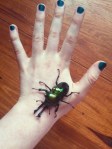
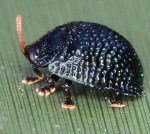
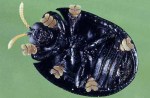
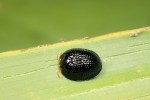
lovely palmetto tortoise beetle sons. look at their sweet feets, look at their darling dimples
LOOK AT THE LITTLE FEET
These little feet are not only pretty, they are extremely functional!
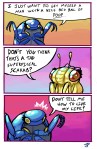
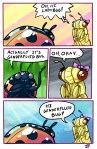
Like a gecko, this tortoise beetle (Hemisphaerota cyaneae) sticks to surfaces using many many tiny hairs on it’s feet! The hairs are coated in oil, and the combined surface tension of the oil keeps the beetle stuck down. When faced with danger (Ants!), the beetle clamps down and will not be moved.
I remembered reading this in a book once, and after a bit of research I found it! In Tomas Eisner’s For Love of Insects, (phenomenal book, btw), he showcases an experiment where researchers tested the strength of this little beetle’s feet using a pulley system, wax, and a succession of larger weights. The beetle was able to withstand 2g of lift-pressure, 148x its own body weight! So yes, please do look at their feet, they are really amazing.
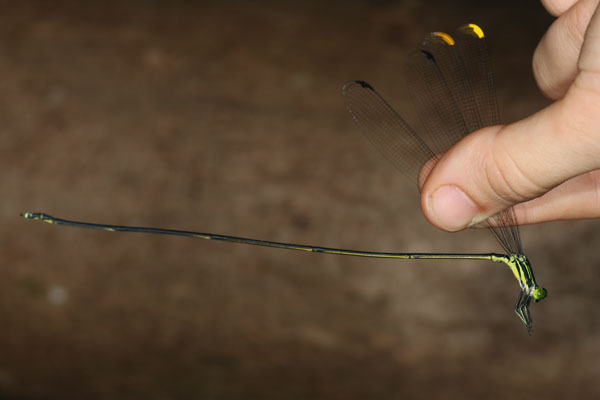
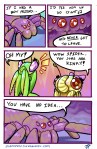
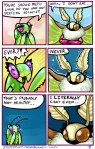
M. linearis is one of the eleven known Helicopter damsels, known for their big wings and very lang abdomen. The Neotropic species are native to South and Middle America, where they live in tropical rainforests. Here they use their long abdomens to lay eggs in water-filled bromelias.
Animalia – Arthropoda – Insecta – Odonata – Zygoptera – Pseudostigmatidae – Mecistogaster – M. linearis
actually wait i want to talk about the weird Tree Orbs i found while i was visiting my family a while back
they were everywhere, attached to a lot of the oak leaves on the ground and nobody had Any idea what they actually were, so i took em home and did a little digging
in fact the balls are called oak apple galls, and are caused by WASPS. actual literal wasps are directly responsible for these tiny tree eggs, and inside of them are, you guess it, More Wasps
the insect responsible is called the oak apple gall wasp, and the growth ( which is initially bright green) is caused by chemicals injected along with the wasps egg directly into the center vein of the leaf. eventually the round outer husk forms with the tiny wasplet inside, who lives in and eats the gall until it emerges later as an adult wasp
the lifecycle of em actually starts at the ROOTS of the oak tree instead of right with the leaves – whatever adult wasp that manages to stay alive long enough to lay its eggs puts em directly at the bottom of the tree, where they hatch into larvae that eventually molt into all-female wingless wasps. THEN these wasps crawl up the tree every spring and put ANOTHER egg into the leaf, and the whole thing starts all over again. seems like a lot more steps than necessary but im also not a wasp what do i know
the apple galls are mostly hollow when you crack em open and look an awful lot like a tiny shaved kiwi filled with string, but theres actually many species of gall wasp that all cause different distinctive growths along their chosen plant, like the artichoke gall wasp
and the beaked twig gall wasp
and others ! the growths themselves dont usually damage the plant though and the wasps are entirely stingless, so if youve got a bunch of these things around your house and had no idea they were filled with little flying bugs until Just Now, no worries
This is the coolest video you’ll see today—gorgeous time-lapse of bug-eating plants growing and consuming their prey.
While you may have only heard of a few types of carnivorous plant, like the famous Venus flytrap, there are actually around 600 species of these guys worldwide, with a bunch of different feeding strategies.
On a personal note, this year for Mother’s Day I bought my mom a pitcher plant—another common carnivorous plant. She loved it. Clearly we are related.
Festooning, bearding, and air conditioning are some of the cutest things bees do. When you take frames out of busy lower supers, you will usually always get a bee “daisy chain” of festooners trying to keep you from tugging the frame out.
The air conditioning is my favorite, though. You will see a little line of workers sitting at the front of the hive with their butts facing the entrance, and they will all start rapidly buzzing their wings. They’re blowing “cooler” air into the entrance to try and bring the hive temperature down so that the gals inside can work more efficiently.
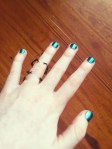
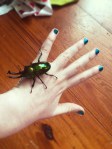
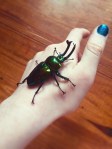
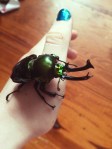



 EY FATTY BOOM BOOM