Researchers at the University of St Andrews have discovered that crows store their tools when they don’t need them – just like people.
New Caledonian crows are famous for using stick tools to get insects out of tree holes and other hiding places. Crows hold the tools in their bill when foraging but need to put them down to eat.
In the first study to look at how animals (non-human) avoid misplacing their tools, researchers discovered that crows carefully place them under their feet to use again later. If foraging at a height rather than on the ground, crows look after their tools more carefully and even seem to get really upset when they accidentally drop them.
Tool ‘safekeeping’ may be very important as crows can spend more time on the critical business of finding food, rather than wasting time making replacements.
I also had a blood exam tell me I lacked vitamin D and my brother was like “HOW THE HELL DO YOU LACK VITAMIN D WE LIVE IN BRAZIL”
now that i think of it my only sources of sunlight on most days are two 20-minute breaks in between my morning classes, since i spend the afternoons studying inside the building?? also it’s been hella cold for the past 2 months or so, so i might have been covering up my skin more?? like my vitamin D levels are p low but now i’m surprised theyre not even worse
my blood exams came back and i’m lacking both vitamin D and HDL cholesterol (the “good” cholesterol)
so basically i need more sunlight and exercise but i don’t know how i’ll fit the latter with my study schedule lmaooo
me before working out: i dont wanna do this
me while working out: I D O N T W A N N A D O T H I S
me after working out: WOW, i am simply phenomenal. every drop of blood running through my veins is graced with the ichor of the gods, i am an olympic athlete
While looking at the little screech owl, I took a series of photographs and made this gif to illustrate the of the automatic grasping action of the talons.
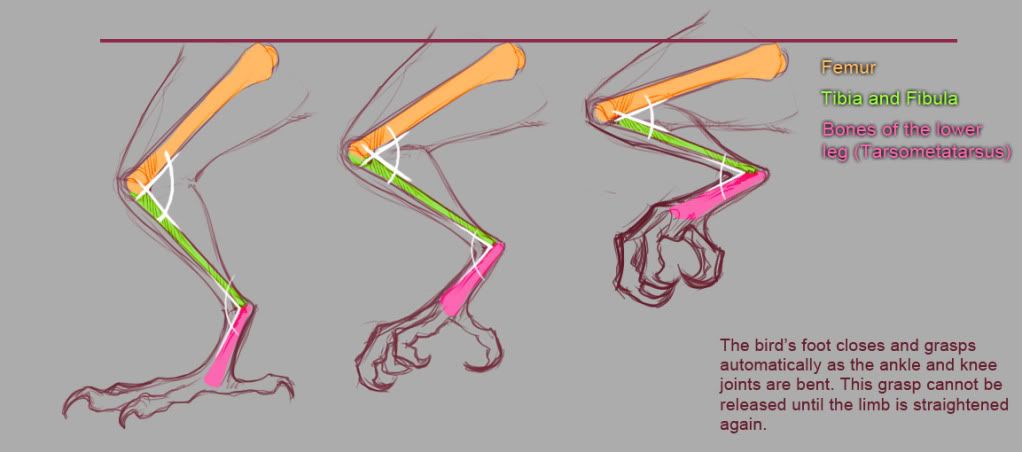
The structure of bird feet is set up so that the foot automatically grasps when the ankle joint is bent.
This automatic grip allow birds to sleep while perching, and for raptors clench/grasp prey as the leg is folded on impact.
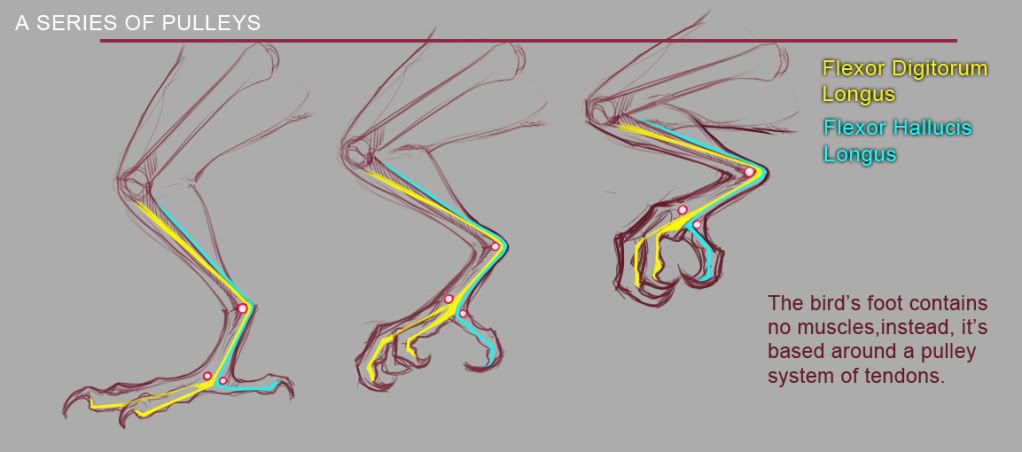
The mechanism of the foot is ingenious…. there’s no muscle in there at all.
The foot is powered entirely by a pulley system of tendons.
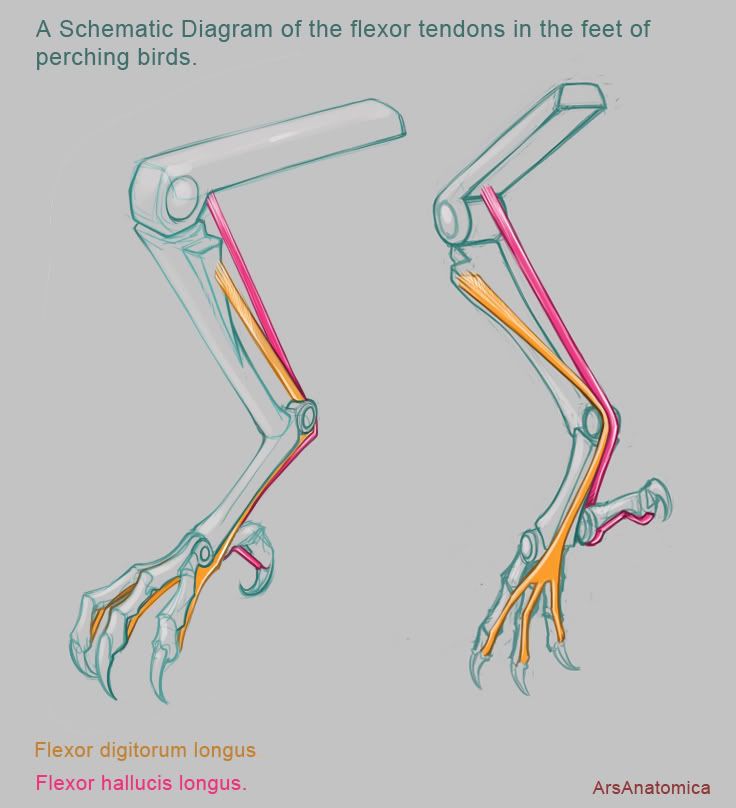
Two tendons that run along the back of the leg, Flexor Digitorum Longus and Flexor Hallucis Longus are responsible for the automatic grasp. The former pulls the forward facing toes, and the latter pulls on the hallux, or back toe.
I drew a schematic diagram of these two tendons here:
It’s particularly interesting in raptors.
Raptors swoop down on prey with talons/legs outstretched. The impact with the prey folds the raptor’s legs against its body, causing the talons to clench automatically, tearing into the prey. The automatic grip is strong enough to kill, and is what allows many hawk species to catch and kill other birds in midair.
The ingenuity and perfection of this mechanism is mind-blowing.


 EY FATTY BOOM BOOM