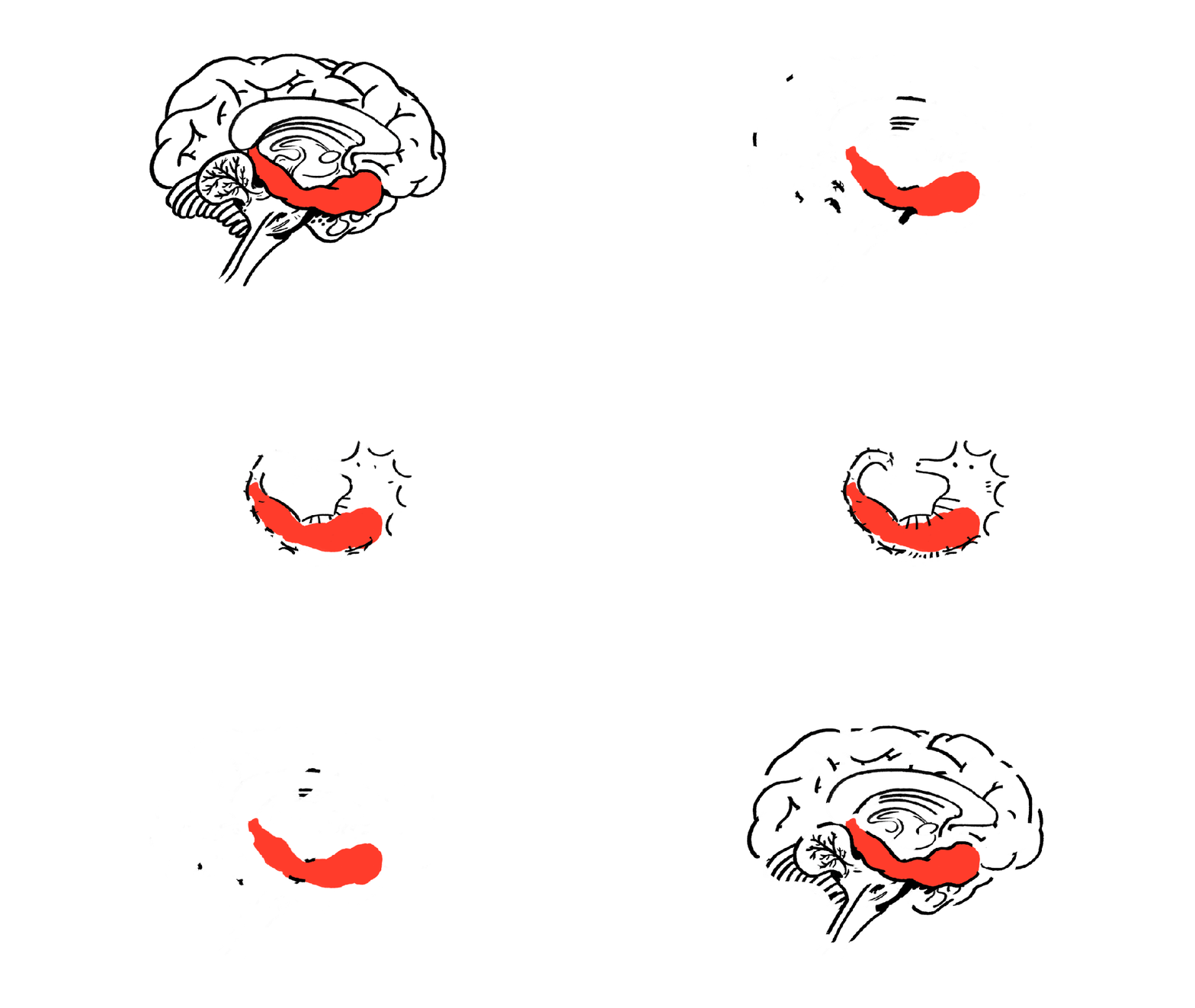
The Seahorse In Your Brain: Where Body Parts Got Their Names
The hipbone’s connected to the leg bone, connected to the knee bone.
That’s not actually what those body parts are called, but we’ll forgive
you if you don’t sing about the innominate bone connecting to the femur
connecting to the patella. It just doesn’t have the same ring to it.When the ancient Greeks were naming body parts, they were probably trying to give them names that were easy to remember, says Mary Fissell,
a professor in the Department of the History of Medicine at Johns
Hopkins. “Sure, there were texts, but the ancient world was very oral,
and the people learning this stuff have to remember it.”So the Greek scholars, and later Roman and medieval scholars,
named bones and organs and muscles after what they looked like. The
thick bone at the front of your lower leg, the tibia, is named after a
similar-looking flute.
And although you or I might get confused when a paleoanthropologist
writes about the foramen magnum (which translates to “really big hole”) a
native Latin speaker would know exactly what to look for — the really
big hole where your brain attaches to your spine.

 EY FATTY BOOM BOOM