How ‘neurosexism’ is holding back gender equality – and science itself
People looking for proof that men and women
learn, speak, solve problems or read maps differently often think brain
scanners are the ultimate answer. And it’s easy to see why. Whether you
want to advocate separate schools for girls and boys or sex-segregated
training of our armed forces, you can be sure to find brightly
colour-coded maps highlighting differences between males and females in
various brain areas – potentially backing up your argument.
The power of “neuro” has been firmly harnessed in the ongoing debate about the differences between men and women.
Enthusiastic references to “cutting edge neuroscience” are constantly
used by people making assumptions about sex differences – ranging from
marketers to politicians and pressure groups.The idea that the brain
is responsible for sex/gender differences or imbalances has been with
us for a long time. In the 18th century, scientists discovered that
women’s brains weigh on average five ounces less than men’s
– something that was immediately interpreted as a sign of inferiority.
Since then, women’s brains have continued to be be weighed, measured and
found wanting. This has been underpinned by a belief in “biological
determinism” – the idea that biological differences reflect the natural order of things, to be meddled with at society’s peril.Unfortunately, this is still happening today. “Neurosexism”
is the practice of claiming that there are fixed differences between
female and male brains, which can explain women’s inferiority or
unsuitability for certain roles. By spotting sex-dependent activity in
certain brain regions – such as those associated with empathising,
learning languages or spatial processing – neurosexist studies have
allowed an established “go-to list” of sex differences to flourish. This
includes things such as men being more logical and women being better
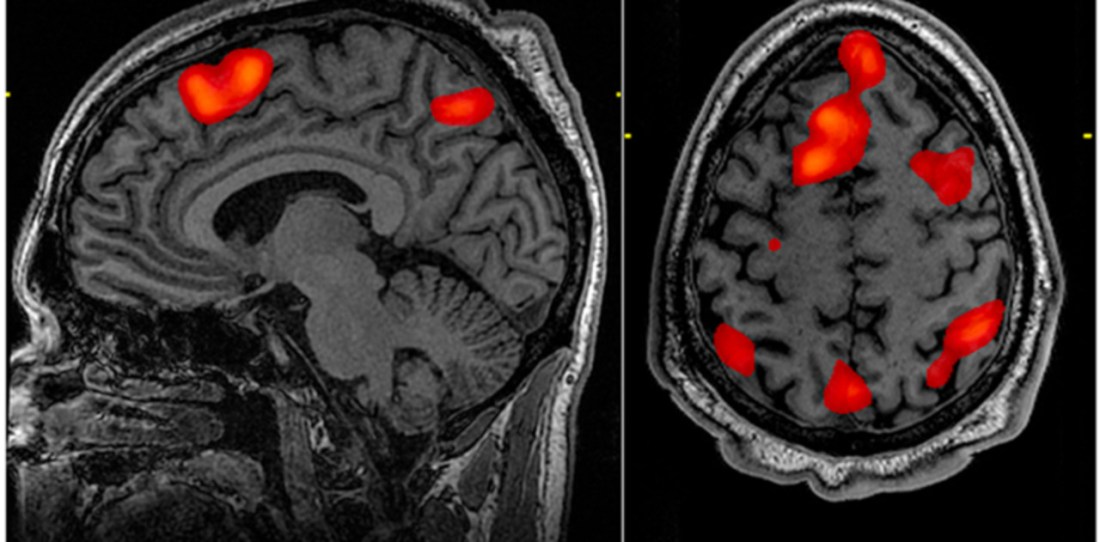
at languages or nurturing.FMRI scan during working memory tasks. Credit: John Graner, Neuroimaging
Department, National Intrepid Center of Excellence, Walter Reed
National Military Medical Center, 8901 Wisconsin Avenue, Bethesda, MD
20889, USA

 EY FATTY BOOM BOOM